
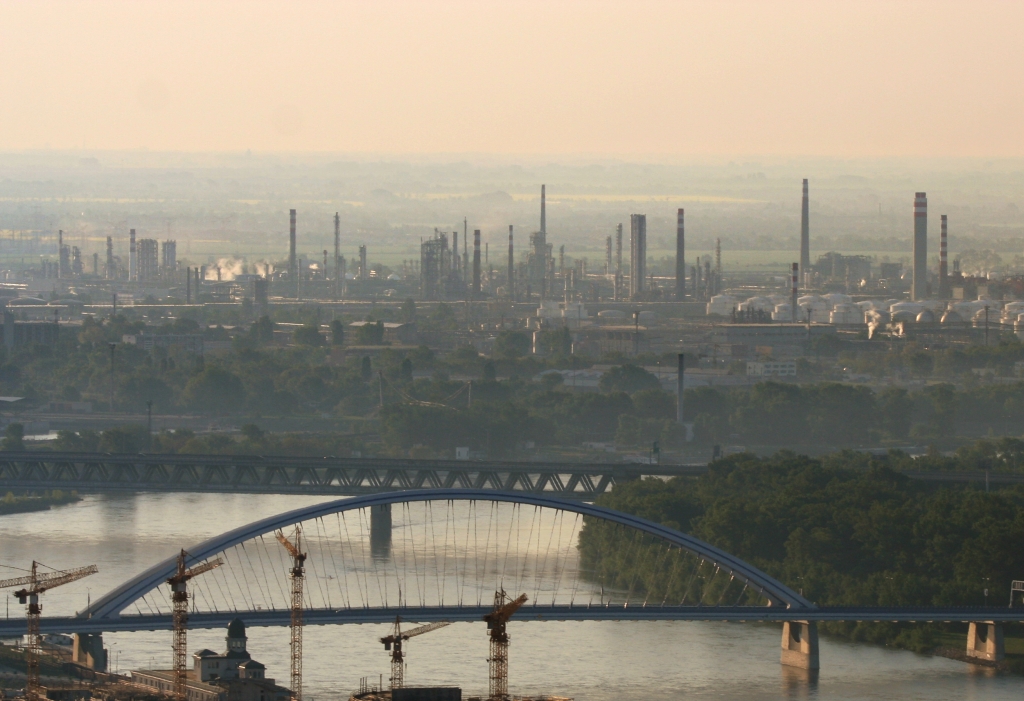
The Slovak government declared a state of emergency and confirmed that 250,000 tonnes will cover the crude oil demand of one month of the refinery, thereby securing motor fuel supplies for the domestic market. Slovnaft has redirected its entire output to the domestic market and has suspended diesel exports to Ukraine.
Hungary also released the same amount, 250,000 tonnes of crude oil from its strategic reserve. The local branch of regional fuel company MOL Group has preferential rights to use the Hungarian oil reserves.
Slovakia and Hungary expect the first seaborne shipment of Russian oil to arrive via Croatia in early March, which should ease the pressure caused by the disruption of Druzhba pipeline which runs through Ukraine.
According to the European Commission, there are no short-term supply risks in the region and no fuel shortages have been observed, although the Druzhba shutdown has already reduced previous oil flows to Hungary and Slovakia by nearly a quarter.
According to Priit Enok, board member of the Estonian Stockpiling Agency, the introduction of strategic fuel reserves in Slovakia is a vivid example of the importance of reserves.
‘The situation is not unexpected – years of Russia’s war of aggression against Ukraine and the dependence of Slovakia on Russian oil made the current supply disruption predictable. A technical solution exists in the form of the Adria pipeline and alternative crude supply options, but geopolitical attitudes have become an obstacle to a softer resolution,’ said Enok.
Global fuel markets have grown increasingly nervous amid the military build-up of the United States in the Middle East, particularly around Iran.
Iran is one of the most important producers of oil and liquefied natural gas (LNG), with a total volume of around 4.7 million barrels per day, or nearly 4% of the global fuel market.
If hostilities were to break out, the loss of such volumes of oil and gas would have a significant impact on market balance. Iran has previously threatened to close the Strait of Hormuz, one of the world’s most important international shipping lanes, in the event of a conflict. The narrowest point in the strait is just 33 kilometres, but almost 25% of the world’s oil production and 20% of LNG passes through it.
In addition to oil, the Strait of Hormuz is also an important shipping route for other critical commodities. Disruption to shipping could affect supply chains and lead to delays in the import of raw materials, electronics, and consumer goods in Europe. Recently, Iran conducted military exercises in the Strait of Hormuz aimed at establishing full control over maritime traffic in the area.
The strategic liquid fuel stocks of Estonia cover 90 days of regular consumption and is kept 100% in finished products such as petrol, diesel, and aviation fuel. The bulk, or 88%, of the national fuel stocks are stored in Estonia. The primary purpose of the stocks is to ensure domestic supply security in situations where fuel imports are disrupted.
In addition to the strategic stocks owned by the state, there is a further 33 days’ supply of petrol and 30 days’ supply of diesel in Estonia as commercial stocks of fuel companies as at the end of January. According to the Estonian Stockpiling Agency, the motor fuel supply of Estonia remains stable and no supply disruptions have occurred.

